

Understanding the Thickening Versatility of MAGGI® Gravy: A Professional Chef’s Guide
Discover the different techniques to thicken gravy and create the right consistency and flavour for each dish. We also explore how versatile, reliable, and consistent MAGGI® gravies can be to a professional chef.





Every professional kitchen relies on strong foundations, and MAGGI® gravies deliver consistent quality, great taste, and the convenience busy chefs demand. From traditional Sunday roasts to contemporary gastropub fare, the right gravy consistency can transform your dishes.
But the real art lies in customisation. Whether you're perfecting a signature dish or adapting to different menu requirements, knowing how to adjust your gravy's consistency gives you complete control over the final result.
This article shares techniques on how to thicken gravy and enhance flavour. Explore the principles behind each method, and discover practical tips to achieve flawless results every time – all while unlocking the versatility of MAGGI® in your kitchen.
Understanding How to Thicken Gravy: The Basics of Professional Gravy Thickening
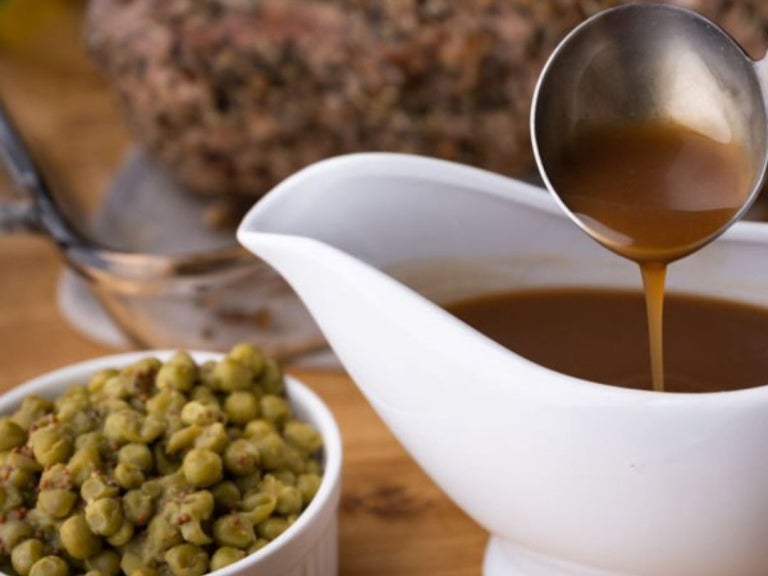
The perfect gravy consistency makes all the difference to a dish. It elevates flavour and ensures a smooth texture that enhances the overall dish experience.
Effective thickening relies on starch-based agents such as flour, cornflour, and arrowroot. When heated in liquid, these starches absorb water and swell, creating viscosity and a smooth, thickened gravy finish. Understanding how each behaves will help you choose the right method.
There are three core methods chefs rely on: a roux, a slurry, or reduction. We’ll explore classic methods of thickening, then demonstrate how MAGGI® gravy provides a versatile alternative with consistent quality.
How to Control Thickness in Busy Kitchens
Understanding how to thicken gravy allows you to customise gravy to specific dish requirements or preferences.
The main methods are:
Using a Starch Slurry
The quickest method for thickening. A starch slurry can be made using various starches – cornflour, flour, xanthan gum, or arrowroot.
- Mix equal parts cold water with your starch of choice.
- Whisk thoroughly until completely smooth with no lumps.
- Bring your gravy to a gentle simmer.
- Gradually pour the slurry into the simmering gravy whilst whisking continuously.
- Continue simmering for 2-3 minutes, stirring regularly, to cook out any starchy taste.
- Check consistency – if needed, repeat with a smaller amount of slurry.
Making a Roux
This method uses butter and flour, and adds an extra layer of depth and richness to your gravy.
- Melt equal parts butter and flour in a pan (start with 2 tablespoons of each).
- Cook on medium-low heat for 2-3 minutes, stirring constantly until the mixture becomes golden.
- Gradually whisk in warm stock or prepared bouillon.
- Once smooth, add your prepared gravy base.
- Simmer for 5-10 minutes, whisking occasionally.
Making a Beurre Manié (a ‘Cold Roux’)
A beurre manié (French for ‘kneaded butter’) is a technique that also uses butter and flour to thicken gravy at the end of cooking.
- Combine equal parts of softened butter and plain flour, blending together with the back of a spoon. 50g thickens about 2L of gravy.
- Once your gravy is at simmering point, add small amounts of the beurre manié and whisk vigorously to help it dissolve. Repeat this process until the desired consistency is achieved.
- Reduce to a gentle simmer to cook out the flour.
Reduction Gravy
This method concentrates flavours whilst naturally thickening gravy.
- Pour your prepared gravy into a wide pan (a larger surface area speeds up evaporation).
- Heat on medium-high, ensuring the gravy is at a steady simmer.
- Leave the lid off to allow steam to escape.
- Simmer for 15-30 minutes, stirring occasionally to prevent catching on the bottom.
- Monitor closely as the gravy thickens and flavours intensify.
- Once desired consistency is reached, remove from heat.
Chef's tip: This method not only thickens but also creates a more concentrated, intense flavour – perfect for dishes that need bold, rich gravy.
Common Pitfalls in Gravy Thickening
Common mistakes to avoid include:
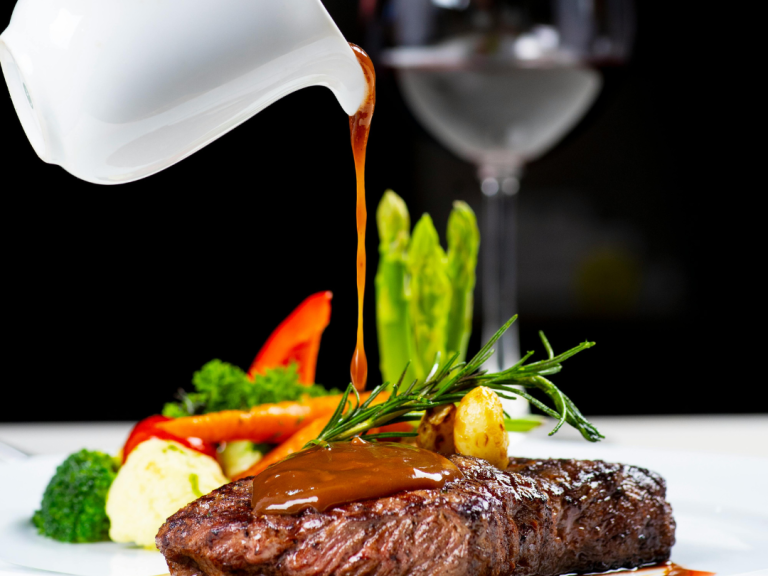
- Lumps – Adding dry starch directly to hot liquid causes the outer granules to gelatinise instantly, leaving raw starch inside and resulting in a lumpy texture.
Solution: Always mix starch with cold liquid first to create a smooth slurry before incorporating it into the hot gravy.
- This occurs when flour in a roux isn’t cooked long enough before liquid is added, or when a slurry-thickened gravy isn’t simmered sufficiently after incorporation.
Solution: Cook the roux until it loses its raw flour taste, and allow slurry-based gravies to simmer gently to develop flavour and eliminate any starchy notes.
Successful thickening is about more than achieving the right consistency – it's about preserving flavour and creating a silky-smooth texture that elevates your dish.
Ingredients Needed for Thickening Gravy
Let’s discover more about the main ingredients that can be used to thicken gravy, and their benefits and drawbacks.
Cornflour (Cornstarch)
A popular choice in professional kitchens. This fine, white powder is made from the starchy part of the corn kernel.
Pros:
- Usually gluten-free (suitable for people with coeliac disease or gluten intolerances). However, it’s always worth checking labels for cross-contamination.
- Virtually tasteless; a versatile addition to any gravy or sauce.
- Adds a smooth texture and glossy appearance.
- A fast, easy way to thicken gravy – ideal for a busy service.
Cons:
- Sensitive to heat – can break down if it’s overcooked.
- Gravies thickened with cornflour slurry may separate slightly when frozen, thawed, or reheated.
- Too much creates a gelatinous texture.
Plain Flour
Plain flour can be used to create either a slurry, or (if appropriate for your application) a roux.
Pros:
- When used in a roux, it can add rich, nutty layers of flavour.
- Creates a velvety, creamy texture.
- Gravies using plain flour reheat well in terms of texture and taste.
- Versatile, budget-friendly, and commonly found in most kitchens.
Cons:
- Flour must be ‘cooked out’ to eliminate a starchy, raw taste
- Compared to cornflour, larger quantities of plain flour are needed to achieve the same thickness.
- Can create a cloudy, muted look.
- Contains gluten, so isn’t suitable for people with coeliac disease or gluten intolerances.
Arrowroot Thickener
This natural starch from the root of the arrowroot plant can also be made into a slurry and added to gravy.
Pros:
- Creates a translucent gravy with an appealing glossy look.
- Virtually flavourless, so does not impact taste.
- Retains a stable texture when frozen and reheated.
- Naturally gluten-free (although it’s always best to double check the label).
Cons:
- May lose thickening power if boiled or exposed to a high heat for too long.
- Can develop a stringy texture if overcooked or left to sit for too long.
- Doesn’t create a traditional ‘matte’ appearance.
- Generally more expensive than flour or cornflour.
Xanthan Gum
Derived from corn, dairy, soy, or wheat, xanthan gum uses a fermentation process converting natural sugars into a sticky substance. Create a slurry with xanthan gum before adding to your gravy.
Pros:
- Can thicken liquids instantly and does not require heat to activate.
- Excellent stability and consistency across different temperatures.
- It’s flavourless, so doesn’t change or mask the taste of your gravy.
- A small amount goes a long way.
Cons:
- Can create a slimy or ‘gummy’ texture if too much is used. Getting the right ratio is key.
- Difficult to mix and can clump easily.
- Typically more expensive than flour or cornstarch.
Beyond thickening agents, consider these additions to enhance your gravy:
- Pan drippings – adding extra depth and meatiness.
- Red wine or port – creating richness and sophistication.
- A knob of butter – adding a glossy finish and silky mouthfeel.
- MAGGI® Liquid Seasoning – intensifying savoury notes.
The Challenges of Gravy Thickening Techniques and Ingredients in Hospitality
While traditional ingredients and techniques can be effective for adjusting gravy consistency, professional kitchens face several operational challenges:
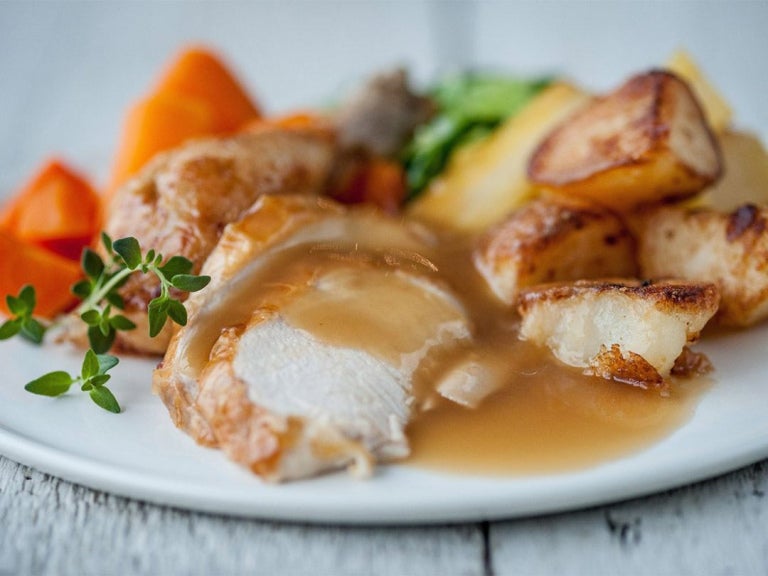
- Consistency: Maintaining a consistent flavour and texture for the same dish is a key priority for taste and presentation. It’s always best to prepare a gravy using the same method and quantities (versus a thickening technique) to achieve the same result every time.
- Time: In a busy kitchen, thickening gravy is an extra step taking up valuable time (plus equipment and space). Using a recipe or commercial gravy where no thickening is required ensures operations are as efficient as possible.
- Cost: Incorporating extra ingredients such as butter, arrowroot, or xanthan gum increases cost per serving.
Five Top Tips from Our Chef
To achieve optimal consistency, below are some extra thickening tips from our chef:
- Gravy consistency is dish-specific - from light jus to thick traditional gravy. A good general rule is that gravy should coat the back of a spoon.
- Aside from the core gravy thickening methods above, experiment with other methods such as adding pureed vegetables.
- Avoid common mistakes such as adding too much slurry at once, undercooking flour in your roux, and not simmering gravy long enough.
- Avoid lumps by always mixing starch-based thickeners with cold liquid (creating a slurry) before adding to hot gravy. Whisk continuously when adding gravy thickeners.
- If your gravy’s too thick, whisk in a little hot water or stock. If it’s too thin, reduce further or prepare a small fresh slurry to whisk in.
For further menu inspiration, click here to discover different recipes using MAGGI® gravy and other MAGGI® products.
Introducing MAGGI® Gravies
MAGGI® gravies deliver great taste, consistent high quality, traditional-style thickness, and a cost-effective way to produce gravy for demanding kitchens.
There are two types – MAGGI® Original Gravy (ideal for meats) and MAGGI® Gluten Free Vegetarian Gravy.
Benefits of Using MAGGI® Gravies
There are different benefits of using MAGGI® gravies instead of core thickening techniques:
- MAGGI® gravies vs. reduction - Maintains full yield instead of reducing in volume, maximising portions and profitability.
- MAGGI® gravies vs. slurry – Built-in flavour complexity from herbs, caramelised sugar, and yeast extract eliminates the risk of starchy flavours or dull appearance associated with basic slurries.
- MAGGI® gravies vs. roux - More cost-effective than butter and flour, plus faster preparation and no risk of lumps or burning.
Let’s explore their characteristics that make them excellent for professional use…
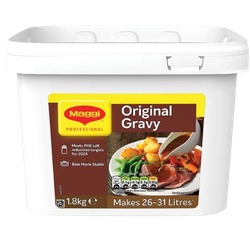
MAGGI® Original Gravy:
- is low fat as prepared
- meets PHE salt reduction targets for 2024
- is Bain Marie stable
- is free from artificial preservatives
- contains no hydrogenated vegetable oils
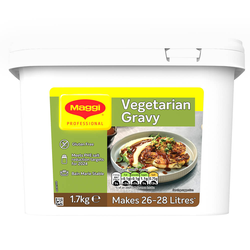
MAGGI® Gluten-Free Vegetarian Gravy:
- contains no added MSG (except for naturally occurring in vegetables and yeast extract)
- is Bain Marie stable
- is free from artificial colours and preservatives
- contains no hydrogenated vegetable oils
- meets PHE salt reduction targets for 2024
Common Questions and Considerations
How to fix gravy that is too watery?
If your gravy is too watery, you can thicken it with a starch slurry or use the reduction method to achieve your required consistency. Alternatively, MAGGI® gravies can be added to thin gravies to boost both thickness and flavour.
How do I mix MAGGI® gravy?
Please refer to each product’s instructions as below, using measurements according to your requirements.
MAGGI® Original Gravy
MAGGI® Gluten Free Vegetarian Gravy
Conclusion
Understanding how to thicken gravy using professional techniques gives you complete control over texture and flavour. Whether you need a consistency adjustment or to add layers of flavour to your signature dish, you now have the knowledge to adapt your gravy to any requirement.
For busy kitchens, MAGGI® gravy provides a consistent, quality foundation – delicious as a standalone gravy on its own, or as a versatile base to create signature dishes. With MAGGI®, you can consistently create meat and vegetarian gravies tailored to any dish, enhancing dining experiences for all your customers.
Nestlé Professional is committed to supporting culinary excellence. Our expert team is available to answer your questions or advise the best products for your kitchen’s unique needs.