

How to Use Coconut Milk Powder in Your Professional Kitchen
Coconut milk powder is a versatile ingredient for professional kitchens, offering the same flavour as traditional coconut milk with added benefits like extended shelf life and space efficiency. It can be reconstituted for use in a wide range of dishes, from curries and soups to desserts and beverages, helping chefs meet the growing consumer demand for global flavours. Proper storage ensures its freshness and prevents waste.





A must-have in any forward-thinking professional kitchen, powdered coconut milk delivers the same rich, creamy flavour as traditional coconut milk. It also offers the efficiency, value, and consistency that busy services require. It's an innovative choice for chefs looking to bring authentic global flavours across different dayparts – from breakfast through to desserts.
Consumer appetites for global flavours are stronger than ever. Over 50% of global consumers are actively seeking novel flavours, and nearly 75% are interested in tasting cuisines from around the world.1 For professional kitchens, this presents an exciting opportunity – and coconut milk powder is the perfect ingredient to meet this demand.
Read on to discover how to use coconut milk powder in your professional kitchen operations. We'll explore its uses, benefits, and best practices for handling and storing, helping you make the most of this remarkably versatile ingredient.
Understanding Coconut Milk Powder
Coconut is an incredibly popular ingredient in modern cuisine – celebrated for its rich flavour that lends itself to dishes across all dayparts. Whether in a creamy curry, beverage, breakfast dish, or dessert – coconut adds variety and an exotic flavour (typically from Asian, Caribbean, and Latin American cuisines) to menus.
Coconut milk offers exceptional flavour, but it has some challenges in professional settings. Once opened, canned coconut milk has a short shelf life, requires refrigeration, and takes up valuable cold storage space. It can also separate, requiring thorough mixing before use, and measuring exact quantities from cans can lead to waste.
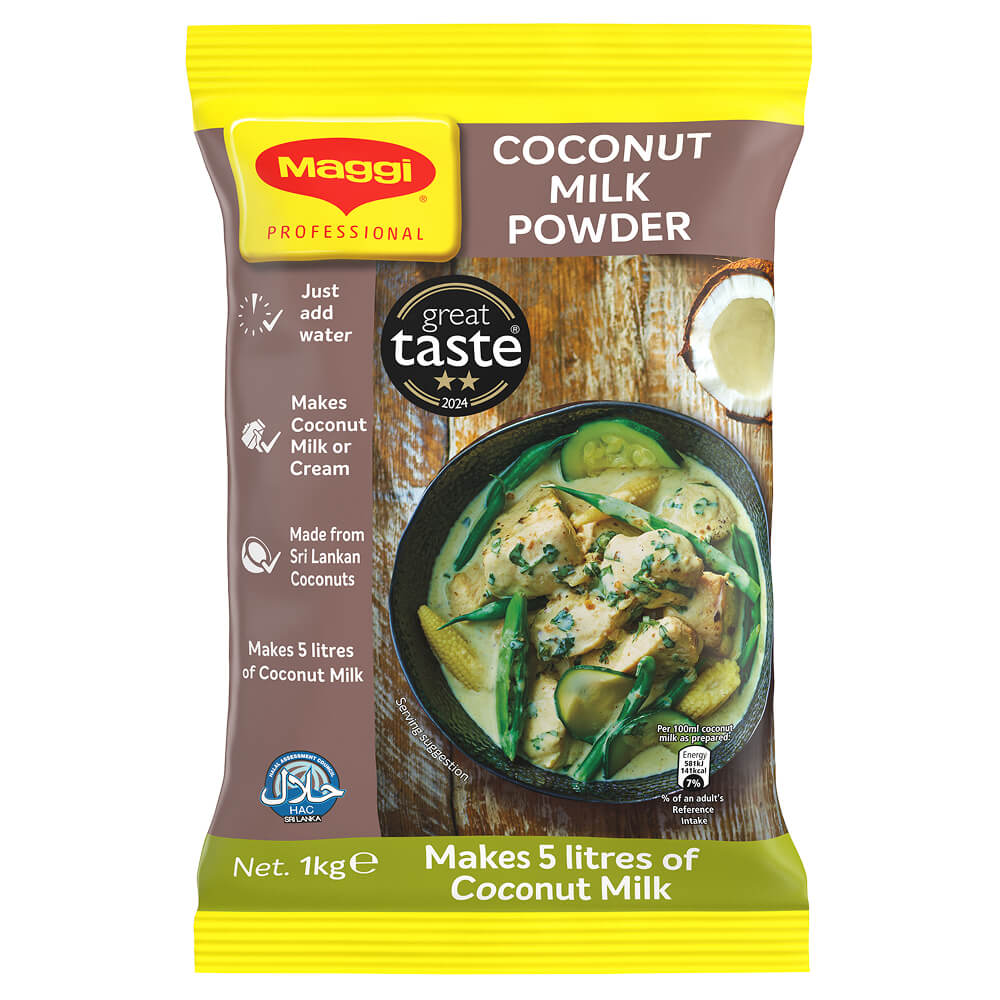
Coconut milk powder transforms these challenges into advantages widely used by chefs. You can either add it directly to the ingredients you are cooking, or reconstitute it with different quantities of water to achieve either a coconut cream or coconut milk consistency.
It has multiple advantages for professional kitchens:
- Extended shelf life – Powder has a longer shelf life than fresh coconut milk, proving to be a cost-effective option.
- Space efficiency – Powder requires no refrigeration and takes up significantly less storage space than canned alternatives.
- Versatility – Mix to your exact specification, creating either rich coconut cream or lighter coconut milk as your recipe requires.
- Consistent quality – Every batch delivers the same flavour and texture, eliminating the variability sometimes found in canned products.
Incorporating Coconut Milk Powder in Your Dishes
Coconut's versatility makes it valuable across every daypart. With breakfast the fastest-growing out-of-home occasion (growing at 13.7%), and dinner following at 5.7%,2 chefs have a prime opportunity to innovate with ingredients like powdered coconut milk.
Let’s explore some of the different uses for coconut milk powder in professional kitchens, and practical ways to maximise its potential on your menus.
Curries and Soups

Coconut milk powder excels in both rustic and refined savoury dishes. Here are practical tips for incorporating it into your curries and soups:
- Measure and mix – With MAGGI® Coconut Milk Powder Mix, you have complete control over consistency. Add it directly to your dish, or create:
- Use warm water – For a smooth result, reconstitute with warm water. This helps create a perfect base and prevents clumping.
- Time cooking to desired taste – Add your coconut milk powder mixture early in cooking to develop a rich, nutty flavour. If you prefer a fresher taste, add it towards the end of your cooking.
- Explore different applications – Thanks to its versatility, it works well in curries and soups that have sweet or savoury notes.
Experiment with it in…
- creamy laksas – Popular in Indonesia, Malaysia, and Singapore, these aromatic noodle soups benefit from coconut's richness balanced with spice and citrus.
- Thai and Indian curries – Create depth of flavour in both spicy and sweet curries, from fragrant green Thai curry to rich South Indian kormas.
- Fusion creations – Even classic Western soups like carrot or butternut squash velouté gain exotic appeal with a coconut milk base.
For further menu inspiration, explore recipes such as our Mangalorean Roasted Cauliflower Curry or our Chicken and Chickpea Curry with Wholegrain Rice.
Desserts and Beverages

Coconut milk powder isn't just for savoury dishes. It's equally useful in sweet applications and beverages – adding further value as a versatile ingredient across different formats.
Below are some creative ways to add it to your dessert and beverage menus:
- Light desserts such as mousses, ice creams, panna cottas, or our creamy Coconut Chia Seed Pudding.
- Indulgent coffees or coffee-based desserts such as Taho: Filipino Bubble Coffee with Silken Tofu.
- Cocktails such as our unique twist on two favourite cocktails – the Tomato Daiquiri Piña Colada.
Achieving Ideal Consistency and Flavour Balance
However you choose to include coconut milk powder in your menu, there are useful ways to achieve optimal consistency and flavour balance:
- Use a whisk to combine the powder and water, to prevent clumping.
- Use slightly less water for richer dishes. For lighter dishes such as soups, consider diluting with more water.
- Carefully balance sweet and salty flavours, as coconut can amplify both.
- Incorporate bold flavours (like a touch of chilli, citrus, or spice) to balance out creaminess.
Storage and Handling of Coconut Milk Powder
Correct storing and handling helps your kitchen avoid spoilage and waste.
Keep your coconut milk powder fresh with these simple practices:
- Store in a cool, dry place away from direct sunlight and moisture. Unopened packs have an average shelf life of 12-24 months. Opened packs typically need to be used within 4-8 weeks. Always check your manufacturer’s specific guidance.
- Prevent humidity exposure by resealing the container tightly after each use and using clean, dry utensils.
- Never return unused powder to the container.
- Refer to the on pack guidance on quantities when mixing coconut milk powder with water.
Conclusion
Offering consistent quality, menu versatility, and cost-effectiveness, coconut milk powder is a convenient option for professional kitchens. It’s a simple yet effective ingredient to transport customers to different corners of the world. It’s also an adaptable ingredient for chefs to experiment with – across savoury and sweet dishes, as well as beverages. Discover more about MAGGI® Coconut Milk Powder Mix and experiment with it on your menus.
If you are also interested in elevating your menu with other ingredients, explore Nestlé Professional's high-quality food range.
Common Questions and Considerations
What is dry coconut powder used for in cooking?
Coconut milk powder is used in cooking to add a rich coconut flavour and creamy texture to both savoury and sweet dishes – from curries and soups to desserts and beverages.
How does coconut milk powder work?
The powder is dissolved into warm water to create either coconut cream or a coconut milk consistency. Alternatively, it can be added directly to dishes during cooking for convenience.
How much coconut milk powder to use?
Refer to the manufacturer's guidance for each product. With MAGGI® Coconut Milk Powder Mix, you can create:
- 600ml of coconut cream using 200g powder and 400ml warm water.
- 500ml coconut milk using 100g powder and 400ml warm water.
Can coconut milk powder replace coconut milk?
It is a good alternative to coconut milk. It offers the same authentic flavour with additional advantages including extended shelf life, space-efficient storage, and portioning that reduces waste.
What is coconut milk most commonly used for?
It is most commonly used in curries, sauces, soups, desserts, and beverages such as coffee and smoothies.
