

Measuring What Matters: Regenerative Agriculture and Proving Impact at Scale
Find out more! Listen to the latest Footprint Sustainability Bites podcast, in association with us at Nestlé Professional.





Top voices from across sustainable agriculture and food supply chains have come together to explore one of the biggest questions in regenerative farming: how do we measure impact, and report it with confidence? In this latest podcast episode, an expert panel discuss the realities of gathering farm-level data, the challenge of consistency across frameworks, and what it will take to build credibility across environmental, social and economic indicators.
Regenerative agriculture is gaining momentum, but adoption at scale depends on being able to evidence outcomes clearly and consistently. In this episode, the panel explores what businesses and farmers need to measure, what’s currently getting in the way, and how supply chains can collaborate to reduce duplication and make reporting more robust.
Why farm-level data is critical
For many food businesses, the majority of their environmental impact sits upstream. Around 70% of Scope 3 emissions can come from the farm stage, rising to 80 - 90% for products such as beef and coffee. The same stage also accounts for most biodiversity impacts, soil health outcomes and land use change.
As Anya Doughty explains, without credible farm-level data it becomes increasingly difficult for businesses to understand, and reduce, their footprint. Foodsteps currently supports partners in measuring approximately 2.5 million tonnes of CO₂e across food supply chains, highlighting both the scale of emissions and the opportunity to drive meaningful reductions.
Nestlé's regenerative commitments
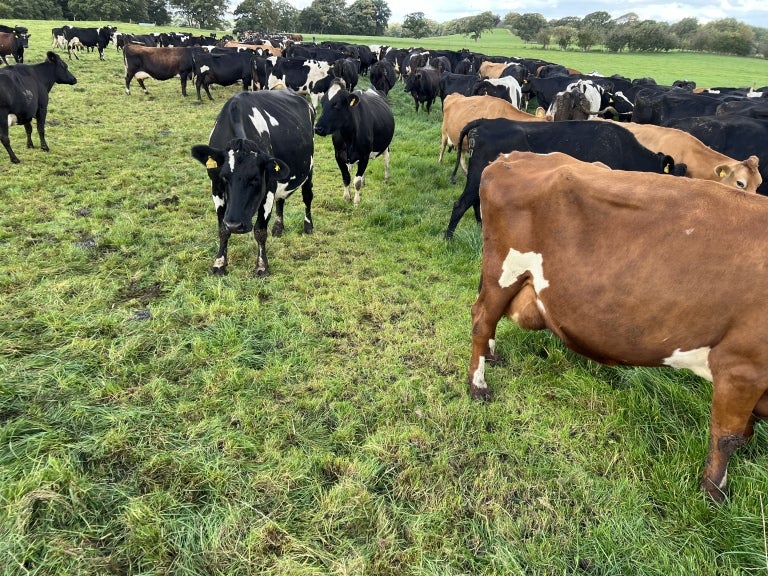
Nestlé has committed to sourcing 50% of its key ingredients from farms practising regenerative agriculture by 2030, alongside a 50% reduction in greenhouse gas emissions by 2030 against a 2018 baseline.
Interim 2025 targets, including 20% regenerative sourcing and a 20% emissions reduction, have already been delivered. The focus now is on scaling progress while maintaining transparency and trust.
Crucially, regenerative agriculture is not defined by carbon alone. Nestlé’s approach encompasses soil health, biodiversity, water stewardship and long-term supply chain resilience. By supporting practices such as cover cropping, reduced tillage and improved crop rotation, the intention is to deliver multiple environmental and economic outcomes simultaneously.
Regen and reformulation: both are needed
While regenerative practices can reduce emissions, particularly through reduced synthetic inputs or deforestation-free sourcing, the panel is clear that regenerative agriculture alone will not deliver net zero targets.
Farm-level transition must sit alongside reformulation, menu design and shifts towards lower-impact ingredients. The pathway to net zero requires action across the full value chain.
Reducing duplication and building collaboration

A recurring theme throughout the discussion is friction. Farmers are already collecting substantial volumes of operational data for compliance and business management. The challenge is unlocking that data in a way that supports wider reporting requirements without creating duplication.
The panel agrees that measurement should build on data farmers already gather for day-to-day management, rather than layering on additional reporting requirements. Greater collaboration across supply chains, and more consistent methodologies, will be essential to ensure data flows efficiently and credibly.
Consistency also matters for farmer confidence. With long production cycles and tight margins, clarity around expectations and long-term commitments is key to enabling sustained adoption of regenerative practices.
Communicating impact with credibility
As regenerative agriculture becomes more visible, so too does scrutiny. The podcast guests explore how businesses should communicate progress, balancing clear, simple messaging with the need for robust evidence.
Certification schemes and recognisable signals can help consumers navigate choices, but these must be underpinned by transparent methodologies and credible reporting. Stories may resonate, but substance builds trust.
Ultimately, delivering regenerative agriculture at scale will depend on transparency, collaboration and consistent measurement across the supply chain.
Mike Warmington, Regeneration Lead, Nestlé UK & Ireland, said:
“Not letting perfect be the enemy of good… if you put your stake in the ground and are transparent about what you’re measuring, people can appreciate that and work with it.”
Anya Doughty, Founder, Foodsteps, said:
“If you’re not capturing that farm-level data, it becomes really tricky to understand what your impact is.”
“For many companies, Scope 3 emissions can account for around 70% of a food business’s total footprint. And for certain products—like beef or coffee—up to 80–90% of those emissions come from the farm stage alone. So if you’re not capturing farm‑level data, it becomes very hard to truly understand and measure your impact.”
Mel Griffith, Head of Growth for Enterprise and Sustainability, Herdwatch, said:
“Most farmers aren’t opposed to sharing data. They’re opposed to duplication. Measurement should become a byproduct of their workflows, not a next task. It’s mostly data that farmers are actually collecting every day anyway for their own management.”

